Founders and investors both talk about traction as if having it is the whole question. It isn’t. Traction can be real and still prove very little if the test that produced it was never meaningfully able to fail. The actual question is narrower: did the market have a genuine opportunity to reject the idea before anyone asked an investor to take it on faith?
Two Kinds of Risk, and Capital Only Lets You Skip One drew the underlying line. Demand risk, whether a market will pay for something, can only be tested through real signals from people with no obligation to give them. Capability risk, whether a team can pull off a technical breakthrough, has no such test available, so investors evaluate something else instead. What follows here is what that first kind of test actually has to look like, and why its weight can change without its order ever changing.
In 2007, Drew Houston posted a demo video of a file-syncing product that didn’t work yet, to Hacker News and Digg, audiences with no reason to be kind to something half-built. The beta waitlist went from about 5,000 to 75,000 overnight. Whatever role that signal ultimately played in fundraising, the important part here is the order: the audience could have ignored the video, mostly didn’t, and the evidence existed before the money arrived.
Chift’s version of the same order came with heavier evidence. The Brussels company raised a modest €2.3 million Seed in 2024, then spent two years getting used by 150 software companies connecting more than 50,000 SMEs, revenue reportedly growing more than tenfold along the way. Only after that did BlackFin Capital Partners lead a €10.5 million Series A. A waitlist and two years of paying customers aren’t the same weight of proof. Early-stage demand risk and later-stage demand risk don’t require the same evidence. But the sequence is identical: the market had its opening to say no first, and the check came after.
Set this next to April’s frontier AI raises, where two former DeepMind researchers took in a combined $9.6 billion before shipping anything. That’s not the same order broken. It’s a different risk: no market test can establish whether the team can actually achieve the technical breakthrough investors are betting on. That’s why pedigree carries weight there that it shouldn’t carry for a SaaS company two years from its first paying customer.
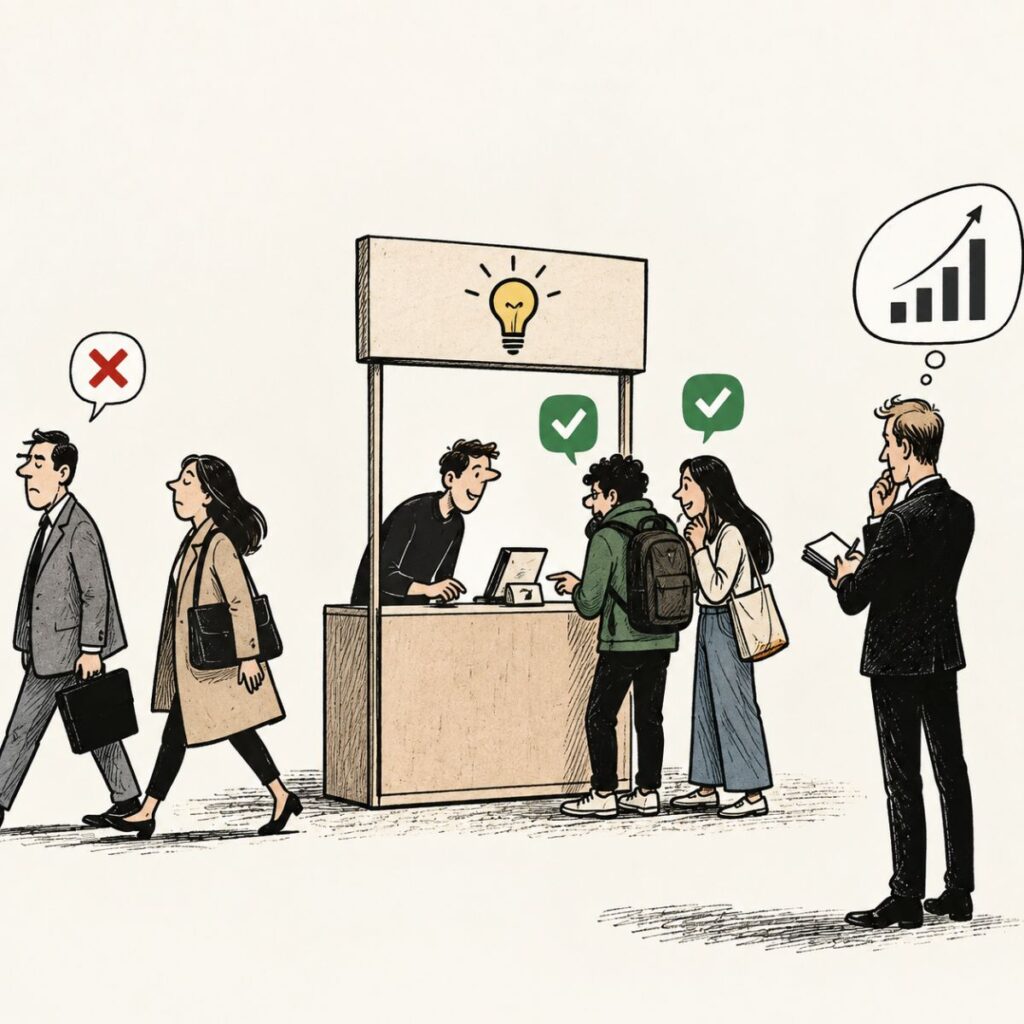
The part worth being precise about: neither Dropbox’s video nor Chift’s two years of sales was an accident that happened to occur before a raise. Both were built deliberately, with fundraising somewhere in mind. That doesn’t weaken them. What would weaken them is if the test had no way to come back negative, a pilot the customer was effectively paid to run, a waitlist built from an audience already committed to the founder, a renewal that was contractually guaranteed. A test built on purpose still counts, as long as the market was genuinely free to ignore it.
The strength of proof isn’t that the test succeeded. It’s that it could have failed.
Not whether there’s a traction slide. Whether the traction would still be true if the slide never got made.
Sources
-
Two Kinds of Risk, and Capital Only Lets You Skip One, Relefy
-
Brussels-based Chift raises €10.5 million Series A to become Europe’s financial connectivity layer, EU-Startups, 14 September 2026
-
Dropbox history: seed round, Y Combinator, and early growth, Nira
-
Dropbox (S07) Raised $6 Million Sequoia-Led Series A In October 2008, Y Combinator