What a Room Full of Builders Reminded Us About Why We’re Here
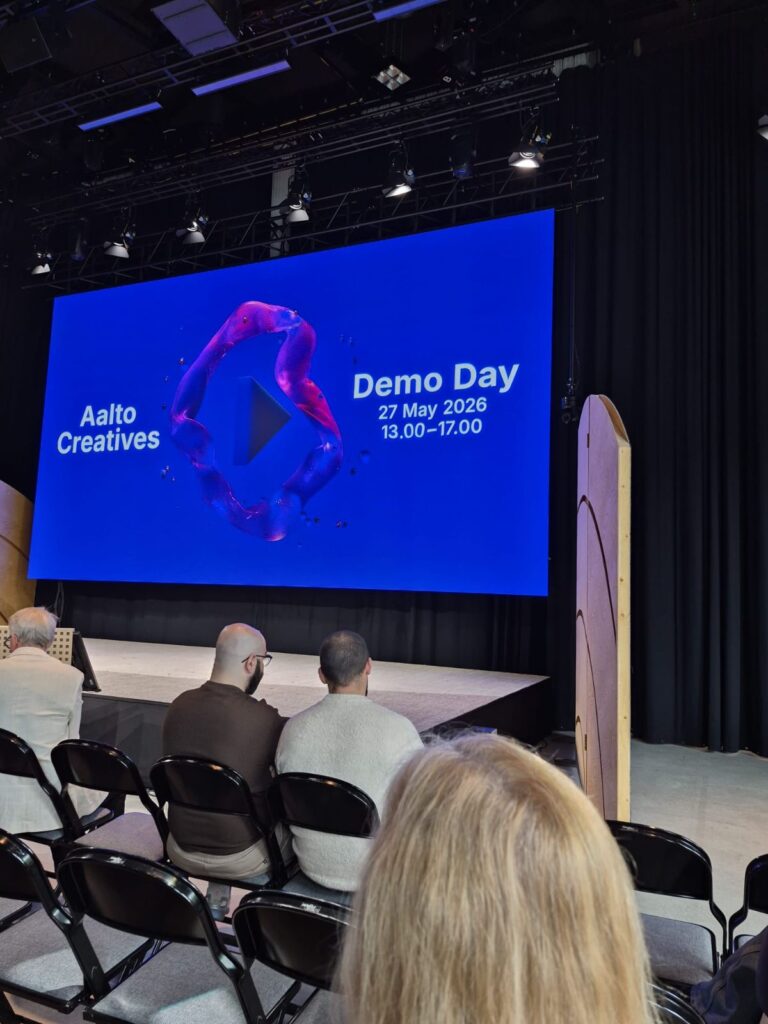
Aalto Creatives Demo Day did not teach us anything new. It reminded us of something we already believed.
We walked into Marsio on a Tuesday afternoon expecting pitches.
What we got was a room full of people building things they genuinely cared about.
The Aalto Creatives Demo Day runs twice a year. Pre-incubator teams present three-minute pitches to a panel of investors and coaches. Previous cohort participants show demos in the Event Studio next to the stage. A keynote sets the frame. The energy in the room was good — the kind that comes from people who are early enough in the process to still be excited by the problem itself.
We were there to watch. We left thinking about what we are building.
The range of ideas on the demo floor was striking. Materials made from seaweed residue. A pitch covering a tribe of women not only buying specific products but participating in making them. Game infrastructure for indie studios. XR research measuring human experience in naturalistic conditions. Machine vision. Platforms targeting creative industries.
Different problems. Different markets. Different stages of development.
But a few threads kept appearing. Several teams were pointing at similar customers from different angles. Education showed up, as did museums — and anyone who has tried to sell into schools or public institutions knows that the product being good is only the beginning of that conversation. The procurement cycle, the stakeholder complexity, the political layer above the person who actually wants the tool — that is a different kind of work entirely, and it compounds fast. We have written about this dynamic before, in the context of Finnish healthcare — the pattern is consistent across public sector markets.
The panel kept returning to the same question across pitches: who is the customer, and do you have one? Some teams had clear answers. Others were still in builder mode, with sales as a future problem, especially figuring out who is the most lucrative segment. Both are valid positions at this stage as you learn that by doing, you cannot plan everything. But the question itself is worth sitting with early, because the answer shapes everything that comes after. As we have written before, the first customer conversation is not a sales event — it is a diagnostic. And the education it gives you is not replaceable.
The keynote touched on something that stayed with us.
Charles Johnson, who led global innovation at Puma before moving to Carnegie Mellon, walked through a case study of a product that won awards, attracted tens of thousands of beta applicants, and still did not commercialize as intended. The market moved. The team, deep inside a large organization, did not see it coming in time.
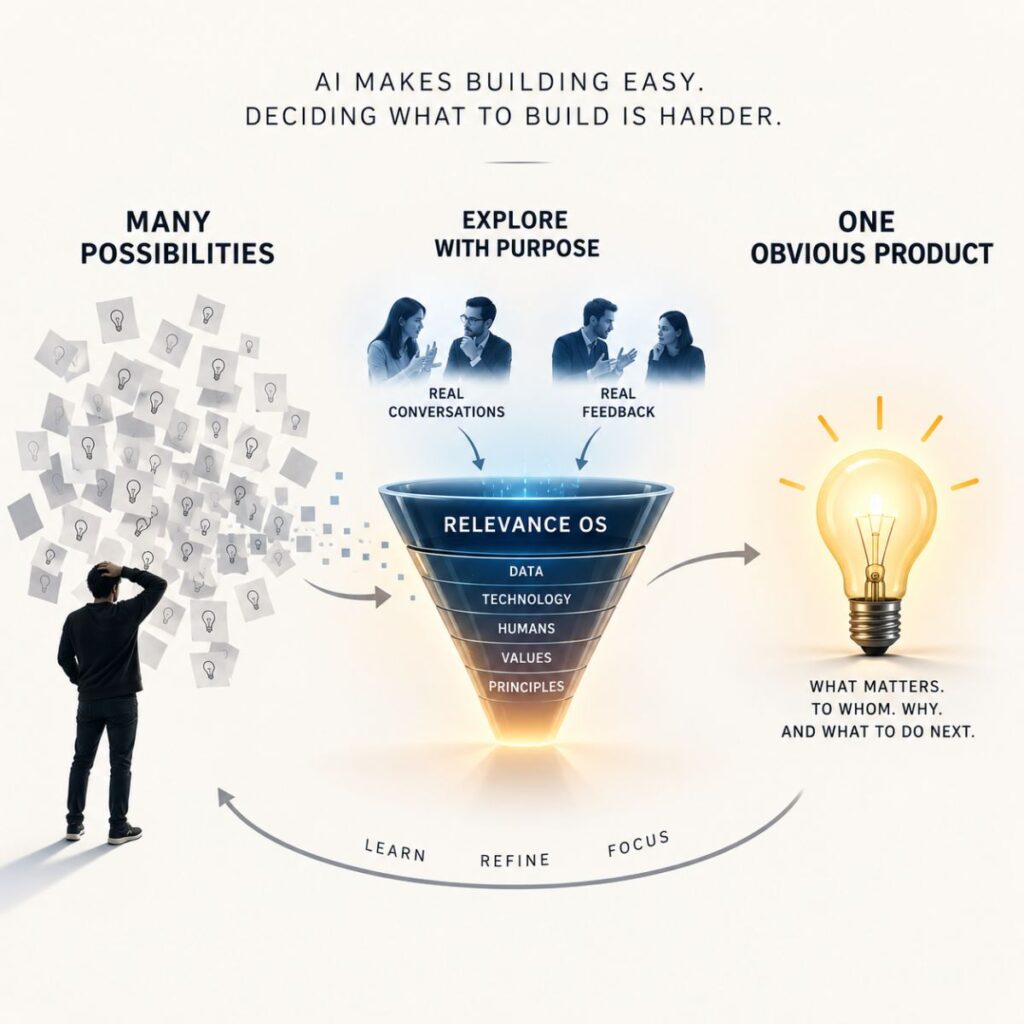
His point was about leading with why rather than what. But underneath that was something simpler: building in isolation — even with significant resources, even with genuine excellence — creates blind spots. The people who could have seen what the team could not were not in the room.
None of this was new to us.
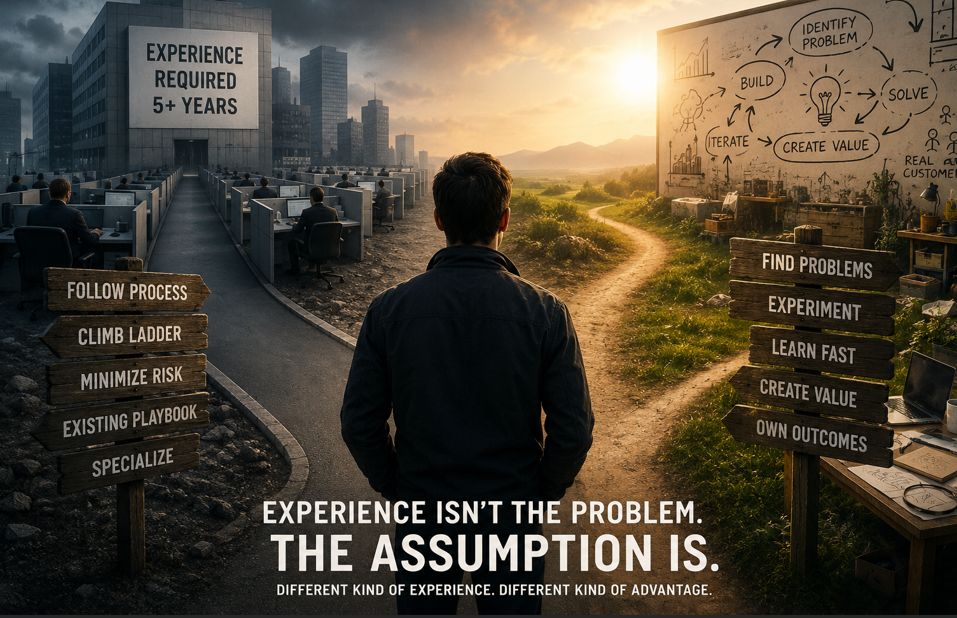
We have written about distribution as a design problem that cannot be deferred. We have written about the cost of holding a contrarian position alone — and what it takes to stay in it long enough for the market to catch up. We have written about what happens when someone who has nothing left to prove chooses curiosity over the nearest title.
What the day at Marsio did was not teach us something different. It confirmed something we already believed, in a room full of evidence that the belief is worth acting on.
There is a version of every pitch we saw on Tuesday where the team finds another team — working on an adjacent problem, targeting an overlapping customer, facing the same technical constraint — and the conversation that follows changes what they build or how fast they can build it. Not because collaboration is always the answer. Because curiosity almost always costs less than the alternative.
That conversation is hard to engineer. Events help, but the window closes fast. What stays is content — something specific enough to make a founder think: that sounds like the problem we are working on, and I should reach out to the person who wrote this.
That is what Relefy is trying to be. Not a directory. Not a matchmaking layer. Just a place where the ideas are specific enough, and the people reading them motivated enough, that the right connections happen without being forced.
The room at Marsio had that potential sitting in it. Some of it will go unrealized. Some of it will not — because someone will read something, recognize something, and send a message.
That is enough to keep building toward.
Relefy covers founders and builders. If this was useful, share it with someone who is building something.